
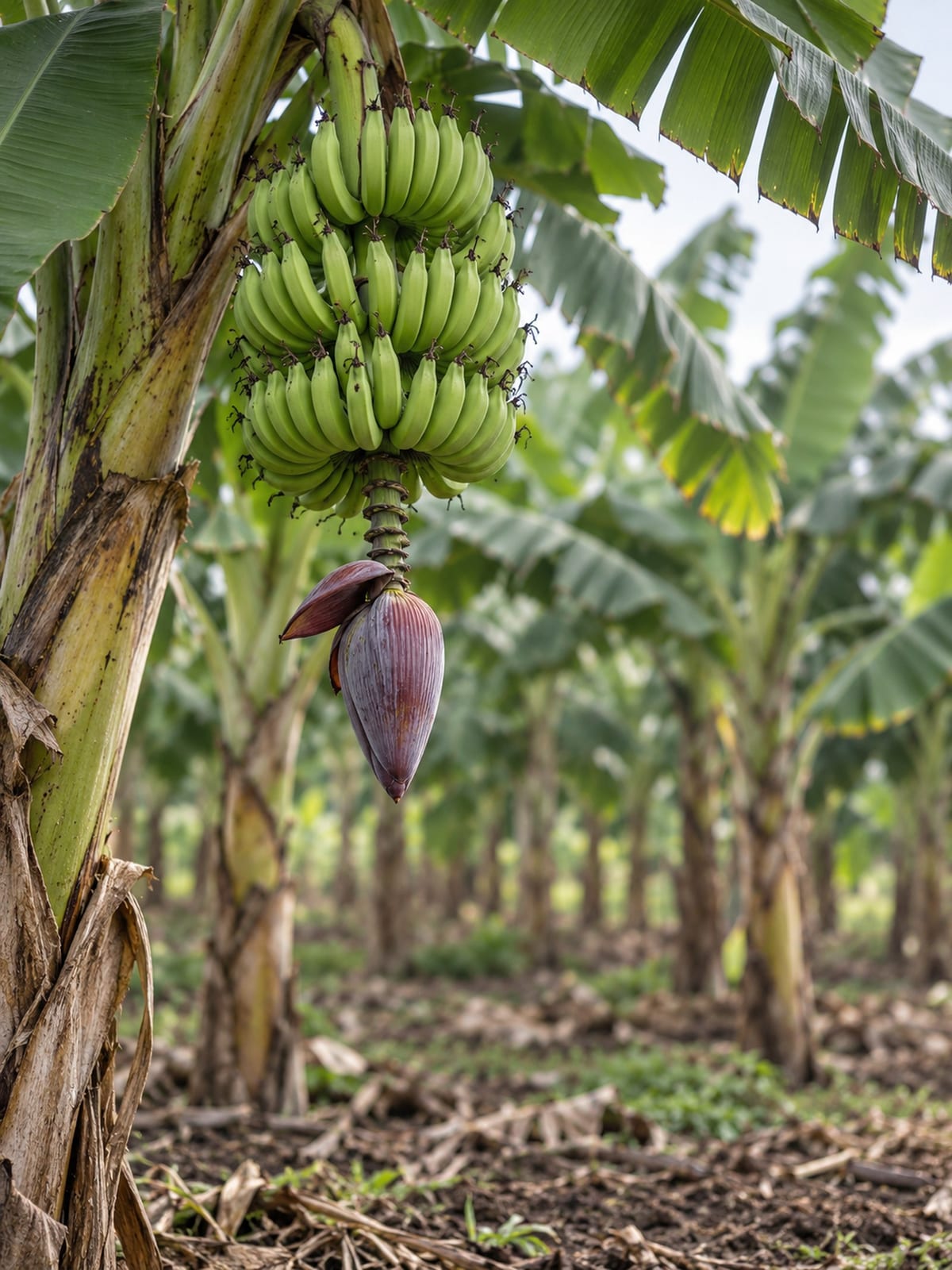
Fruits · Perennial herb, ratoon crop

Banana

Musa spp. · Pisang · Musaceae

A fast-growing perennial grown from suckers or tissue-culture plantlets. Good drainage, steady water and clean planting material decide most outcomes. Fusarium wilt (TR4) is the biggest long-term risk, and prevention matters far more than cure.

  • Tropical
  • Perennial

Summary of cited sources. TERAknow summarises published guidance from the sources linked on each page. Recommendations are general, not guaranteed: results depend on your soil, climate and variety, so confirm with local extension staff or an agronomist before acting.

Key facts

Site and soil at a glance

Soil
Deep loam to clay loam, well drained[1]
Soil pH
6.0 to 7.5; avoid above 7.5[1]
Avoid
Low-lying, saline, very sandy or poorly drained land[1]
Spacing
1.8 × 1.8 m common; high density 4,440 to 6,950 plants/ha[1]
Water
Drip preferred; avoid flood irrigation[1]
Planting time
Avoid cold spells, extreme heat and heavy rain[1]
Soil pH band: 6.0 to 7.5
Good practice

Practices by growth stage

Pick a stage, topic or approach to narrow the list. Open a card for technical detail and its sources.

Growth stage
Topic
Approach

Showing 14 of 14 practices.

    • Core practice
    • Establishment
    • Stage: Planting

    Start with clean planting material

    Use tissue-culture plants or suckers taken only from monitored, disease-free areas. Never take suckers from a mat with wilt symptoms, even if the sucker looks healthy.

    Technical detail
    • Tissue-culture plants are planted at the 5 to 6 leaf stage.
    • Suckers: trim the roots, cut the pseudostem to about 20 cm above the corm and grade by size so the block grows evenly.
    • Infected planting material is the main way Fusarium wilt TR4 travels long distances.
    Regions
    Widely applicable
    Confidence
    High confidence: several institutional sources agree
    • Biological & regenerative
    • Soil biology
    • Stage: Planting

    Inoculate with beneficial microbes at planting

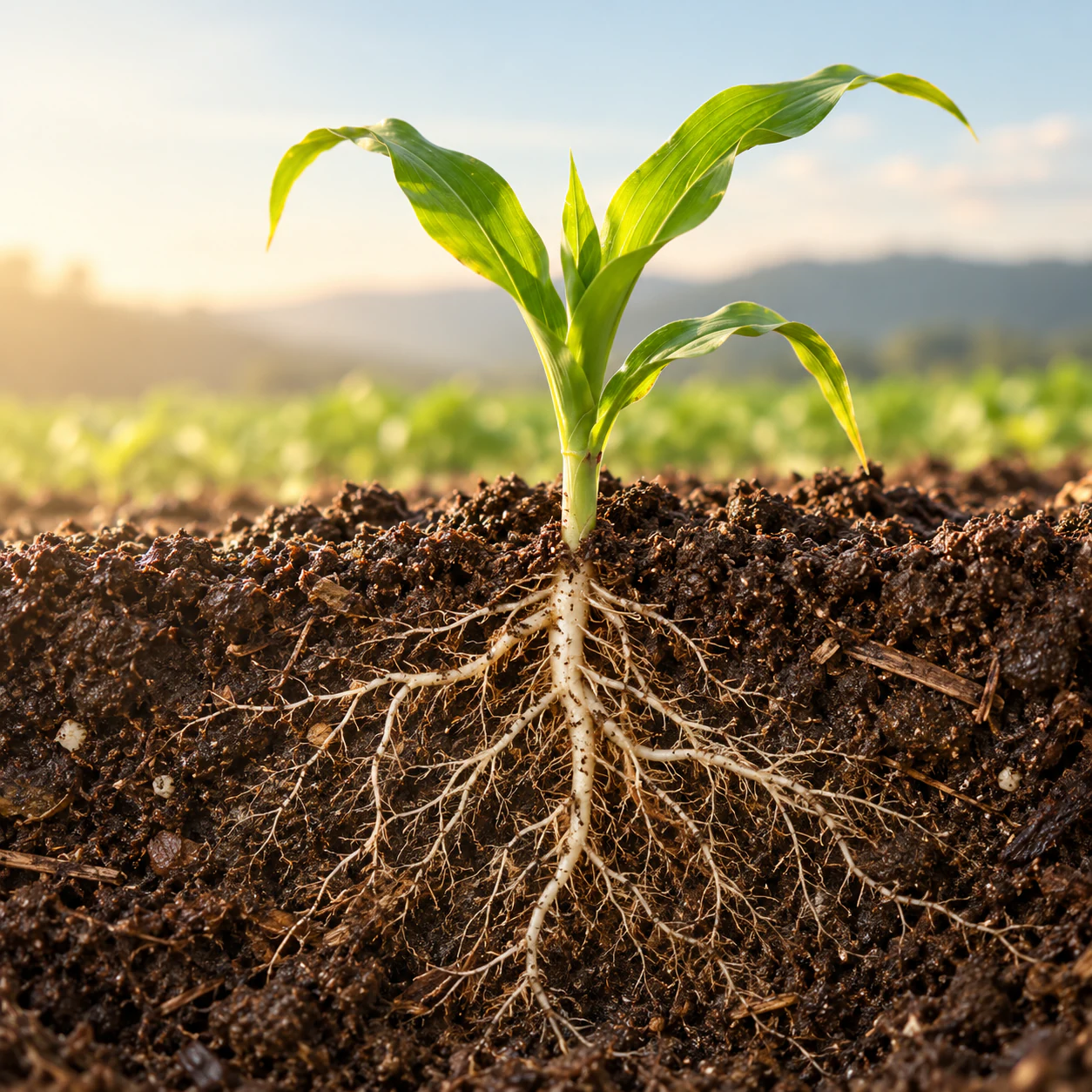
    TNAU recommends Pseudomonas fluorescens at planting, then Azospirillum, phosphate-solubilizing bacteria and Trichoderma viride with farmyard manure in month 4.

    Technical detail
    • At planting: 25 g Pseudomonas fluorescens per plant.
    • Month 4: 30 g each of Azospirillum, phosphobacteria and Trichoderma viride, mixed with 5 to 10 kg farmyard manure per plant.
    • These rates come from one Indian guide. Product strains and rates differ, so follow the label of a registered local product.
    Regions
    India (Tamil Nadu)
    Confidence
    Medium confidence: one institutional guide
    • Conventional
    • Soil & nutrition
    • Stage: Vegetative growth

    Feed in split doses through the vegetative phase

    Apply heavy organic manure before planting, then split nitrogen and potassium into three doses in months 3, 5 and 7 rather than one large application.

    Technical detail
    • Basal: about 50 t/ha farmyard manure before the last harrowing.
    • Month 3: 100 g urea, 300 g superphosphate, 100 g muriate of potash per plant.
    • Month 5: 150 g urea, 150 g MOP and 300 g neem cake per plant. Month 7: 150 g urea and 150 g MOP.
    • Micronutrients: lime and magnesium sulphate in month 5; 0.5% zinc sulphate and 0.5% borax foliar sprays.
    • Doses are from a Tamil Nadu guide. Base local rates on a soil test.
    Regions
    India (Tamil Nadu)
    Confidence
    Medium confidence: one institutional guide
    • Core practice
    • Water
    • Stage: Vegetative growth

    Use drip irrigation and keep roots out of standing water

    Drip is preferred over flooding. Earth up around plants in the rainy season so water drains away from the base.

    Technical detail
    • Stop irrigating about one week before harvest.
    • Give extra water in cool seasons to reduce chill injury.
    • Flood irrigation and surface runoff also move Fusarium spores between plants.
    Regions
    Widely applicable
    Confidence
    High confidence: several institutional sources agree
    • Core practice
    • Crop care
    • Stage: Vegetative growth

    Desucker regularly and keep one follower

    Remove extra suckers so they do not compete with the mother plant. Keep one follower sucker for the next (ratoon) crop.

    Technical detail
    • Remove suckers about monthly; NHB reports that removing them with part of the corm every 5 to 6 weeks hastened shooting.
    • Hill banana systems keep two bearing plants and two suckers per clump.
    • Keep at least 12 functional leaves on the plant; remove only dry or diseased leaves.
    Regions
    Widely applicable
    Confidence
    High confidence: several institutional sources agree
    • Core practice
    • Crop care
    • Stage: Shooting & bunch

    Prop plants and protect the bunch

    Support the pseudostem when the bunch emerges, remove the male bud after the last hand, and cover the bunch with a perforated sleeve.

    Technical detail
    • Prop with bamboo or casuarina poles against the peduncle, especially in windy areas.
    • Cut the male bud after the last hand opens, leaving about 15 cm of stalk.
    • Cover with a 100 gauge polythene sleeve with about 6% ventilation once the last hand has emerged. TNAU reports perforated covers raised yield by 15 to 20% in its trials.
    • Covers protect against sun scorch, cold, thrips and scarring beetles.
    Regions
    Widely applicable
    Confidence
    High confidence: several institutional sources agree
    • Core practice
    • Pests & disease
    • Stage: Vegetative growth

    Keep Fusarium wilt TR4 out with farm hygiene

    TR4 lives in soil for many years and no fungicide controls it. The defence is keeping infected soil, water and plants off the farm.

    Technical detail
    • Clean soil off vehicles, tools and footwear; use disinfectant footbaths at farm entries. Quaternary ammonium products work for tools.
    • Do not share machinery between farms, and limit visitors to affected blocks.
    • Divert surface runoff away from healthy blocks.
    • Resistant varieties are the most effective long-term measure once the disease is in an area.
    Regions
    Widely applicable
    Confidence
    High confidence: several institutional sources agree
    • Core practice
    • Pests & disease
    • Stage: Vegetative growth

    Contain infected plants without spreading soil

    Confirm the diagnosis, then kill and destroy infected plants in place while disturbing the soil as little as possible.

    Technical detail
    • Symptoms: yellowing from the margins of older leaves, a skirt of collapsed leaves, and brown, red or yellow rings inside the pseudostem.
    • Destroy the plant and its suckers on site without chopping it up. Fence the spot and ditch around it to stop runoff.
    • Do not replant a susceptible variety there. Monitor nearby plants every two weeks.
    • FAO suggests a quarantine of at least 1.5 years with clean fallow in an infected zone.
    Regions
    Widely applicable
    Confidence
    High confidence: several institutional sources agree
    • Biological & regenerative
    • Soil biology
    • Stage: Vegetative growth

    Build a disease-suppressive soil

    Organic matter improves microbial balance and the soil's ability to suppress Fusarium. Low pH raises disease risk; liming and calcium lower it, and urea may raise it.

    Technical detail
    • This supports, but does not replace, hygiene and resistant varieties.
    • FAO calls microbial antagonists promising but notes field studies are scarce. Clean planting material plus Trichoderma harzianum let some farms keep cropping infected soils for a few years.
    • Crop rotation alone did not give long-term control.
    Regions
    Widely applicable
    Confidence
    Emerging evidence: early or small-scale evidence
    • Core practice
    • Harvest
    • Stage: Harvest & ratoon

    Harvest green, at about three-quarters maturity

    Cut whole, blemish-free bunches while still green and about three-quarters mature, so fruit ripens evenly after harvest.

    Technical detail
    • Cut the bunch stalk 20 to 25 cm above the first hand.
    • Leave the top cut on the pseudostem after harvest.
    • Exact days from shooting to harvest depend on cultivar and climate; local data still to be added.
    Regions
    Widely applicable
    Confidence
    Medium confidence: one institutional guide
    • Core practice
    • Establishment
    • Stage: Planting

    Choose cultivars with Fusarium TR4 in mind

    TR4 is now the main Fusarium race found in Indonesian surveys and it attacks popular local cultivars. Where the disease is present, favour lines that showed resistance in Indonesian field trials.

    Technical detail
    • The Indonesian Fruit Research Institute reported that more than 65% of isolates in a 15-province survey were TR4. Barangan, Raja and Ambon Hijau are among the affected local cultivars.
    • INA 02, INA 03, the local Ketan 01 and the irradiated mutants Pirama and Ampyang showed potential TR4 resistance in field trials. FHIA 17, FHIA 25 and SH 3640 were also proposed for growers.
    • Ask local extension staff which of these lines are actually available in your area.
    Regions
    Indonesia
    Confidence
    Medium confidence: one institutional guide
    • Biological & regenerative
    • Soil biology
    • Stage: Planting

    Rotate out of banana on Fusarium-affected land

    Fusarium survives in the soil, so replanting banana straight after banana keeps the disease going. Rotation is one of the few field measures that showed benefit in Indonesia.

    Technical detail
    • Indonesian work found that rotation with pineapple and cassava can reduce Fusarium wilt incidence.
    • The same report notes that beneficial microbes such as Trichoderma, Bacillus and Pseudomonas had not yet shown positive results against Fusarium wilt in Indonesian trials. Treat biological products as unproven for this disease.
    • Paddy rice rotation was raised as a possible suppressive option for Southeast Asia, but it was still a research question.
    Regions
    Indonesia · Southeast Asia
    Confidence
    Emerging evidence: early or small-scale evidence
    • Core practice
    • Pests & disease
    • Stage: Shooting & bunch

    Bag the bunch and remove the male bud early against blood disease

    Blood disease bacteria are carried by bees, flies and wasps that visit the male flowers. Removing the male bud and bagging the bunch cuts this route.

    Technical detail
    • Pacific Pests, Pathogens and Weeds: remove the male bud immediately after the last hand emerges, using a forked stick rather than a knife.
    • Bag the inflorescence after it emerges. Bags can come off after fruit set once the male bud is removed.
    • BRIN's Indonesia report lists bagging and debudding, disease-free planting material and removing infected plants as the recommended measures. Chemical control is not recommended.
    Regions
    Indonesia · Pacific
    Confidence
    High confidence: several institutional sources agree
    • Core practice
    • Pests & disease
    • Stage: Vegetative growth

    Clean tools and remove infected plants with their neighbours

    Knives, infected suckers and soil spread blood disease between plants and farms. Hygiene and fast removal of sick plants limit spread.

    Technical detail
    • Clean tools with household bleach diluted 1 part to 3 parts water, and clean soil off footwear (Pacific Pests, Pathogens and Weeds).
    • Check plants often. Remove diseased plants, their suckers and their immediate neighbours. Chop or kill them and burn the dried material on site, including infected fruit.
    • The bacterium can survive in soil and plant remains for over a year. The same guide suggests leaving the site fallow for 18 months without weeds, or under a cover crop such as Mucuna.
    • Never take suckers from an infected mat, and do not plant downhill or downwind of diseased plots.
    Regions
    Indonesia · Pacific
    Confidence
    Medium confidence: one institutional guide
Regional notes

How practice differs by region

  • India

    High-density planting, drip fertigation and biofertilizer schedules are standard extension advice (TNAU).

  • Caribbean & Latin America

    TR4 prevention programmes focus on farm-gate biosecurity, surveillance and fast diagnosis (FAO).

  • Indonesia & Southeast Asia

    Two diseases set the rules for banana in Indonesia. Fusarium wilt has been in Java since the 1910s, and TR4 is now the main race in surveys, affecting Barangan, Raja and Ambon Hijau. Blood disease (Ralstonia syzygii subsp. celebesensis) started in South Sulawesi and is now found from Sumatra to Papua. It hits Kepok (Saba type, ABB) hardest, while Raja, Susu and Mas are less susceptible and well-monitored Cavendish plantations suffer less. Budless Kepok types (Kepok Tanjung) are being distributed because they give insects no male flower to infect. Ministry of Agriculture (Balitbu Tropika) technical guides on these diseases were not fetched; current guidance here comes through TFNet and BRIN presentations and Pacific Pests, Pathogens and Weeds.

Common mistakes

What to avoid, and what to do instead

  • AvoidTaking suckers from a neighbour's mat or a block with wilt.
    InsteadBuy certified tissue-culture plants or take suckers only from monitored, symptom-free areas.
  • AvoidFlood irrigating or planting in low, waterlogged ground.
    InsteadUse drip, raise or earth up rows, and divert runoff.
  • AvoidLeaving every sucker to grow.
    InsteadKeep one follower and remove the rest about monthly.
  • AvoidWalking or driving from an infected block into a clean one.
    InsteadClean and disinfect boots, tools and tyres between blocks.
  • AvoidRelying on urea in a block with wilt history.
    InsteadCorrect low pH, add organic matter and split nitrogen doses.
THE NEXT STEP
LET'S CULTIVATE PROGRESS

Better soil starts
with better decisions.

Turn soil insights into practical action, from testing to targeted improvement.