
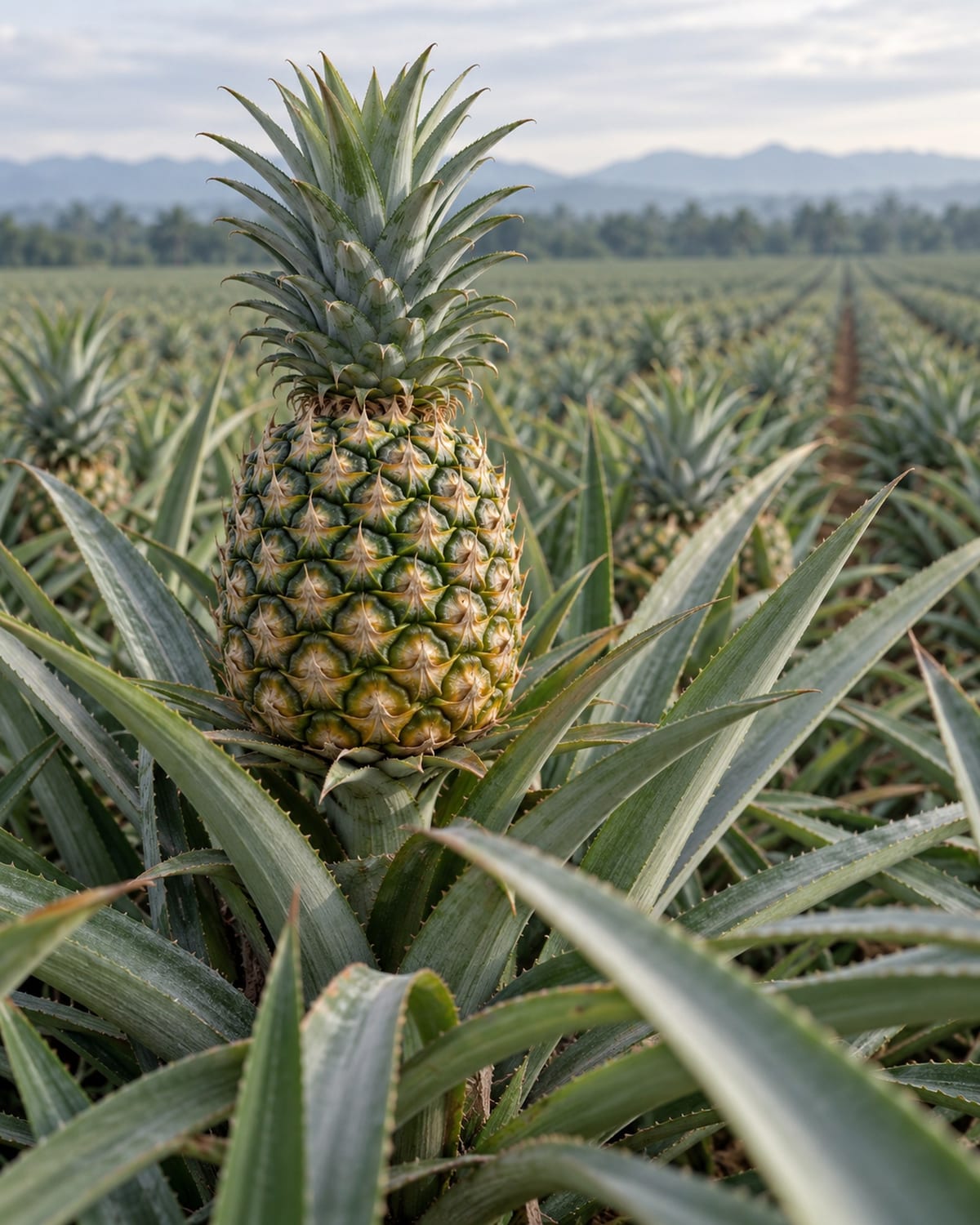
Fruits · Short-stemmed perennial herb

Pineapple

Ananas comosus · Nanas · Bromeliaceae

A hardy crop that tolerates acid, low-fertility soils, including drained peat in Malaysia and Indonesia. Clean planting material, raised beds and planned flower induction set the crop. Mealybug wilt and Phytophthora heart rot are the main disease risks.

  • Tropical lowlands
  • Short-term perennial

Summary of cited sources. TERAknow summarises published guidance from the sources linked on each page. Recommendations are general, not guaranteed: results depend on your soil, climate and variety, so confirm with local extension staff or an agronomist before acting.

Key facts

Site and soil at a glance

Soil pH
5.5 to 6.5 preferred; tolerates 5.0 to 7.0[1]
Peat
Natural Malaysian peat is often pH 3.5 to 3.8; pineapple is widely grown on it[2]
Planting material
Suckers 0.5 to 1 kg (Kerala); slips 10 to 16 oz (Guam)[3]
Layout
Double rows, 70 cm between rows and 30 cm between plants[3]
Forcing
Fruit ready 5.25 to 5.75 months after induction (Kerala)[3]
First harvest
12 months from root suckers to 24 months from crowns[4]
Soil pH band: 5.5 to 6.5
Good practice

Practices by growth stage

Pick a stage, topic or approach to narrow the list. Open a card for technical detail and its sources.

Growth stage
Topic
Approach

Showing 10 of 10 practices.

    • Core practice
    • Establishment
    • Stage: Land & planting material

    Select, grade and cure planting material

    Uniform, healthy suckers, slips or crowns give an even crop that can be forced at one time. Curing helps prevent butt rot.

    Technical detail
    • Kerala: suckers of 0.5 to 1 kg, shade dried about 7 days, lower leaves removed and cured another 7 days.
    • Guam: grade slips by size and cure butt-up in a dry, airy place for a week or more.
    • Time to harvest depends on material: about 12 months from root suckers, 18 from stem suckers and 24 from crowns (BPTP Riau).
    Regions
    India (Kerala) · Pacific · Indonesia
    Confidence
    High confidence: several institutional sources agree
    • Core practice
    • Soil & nutrition
    • Stage: Land & planting material

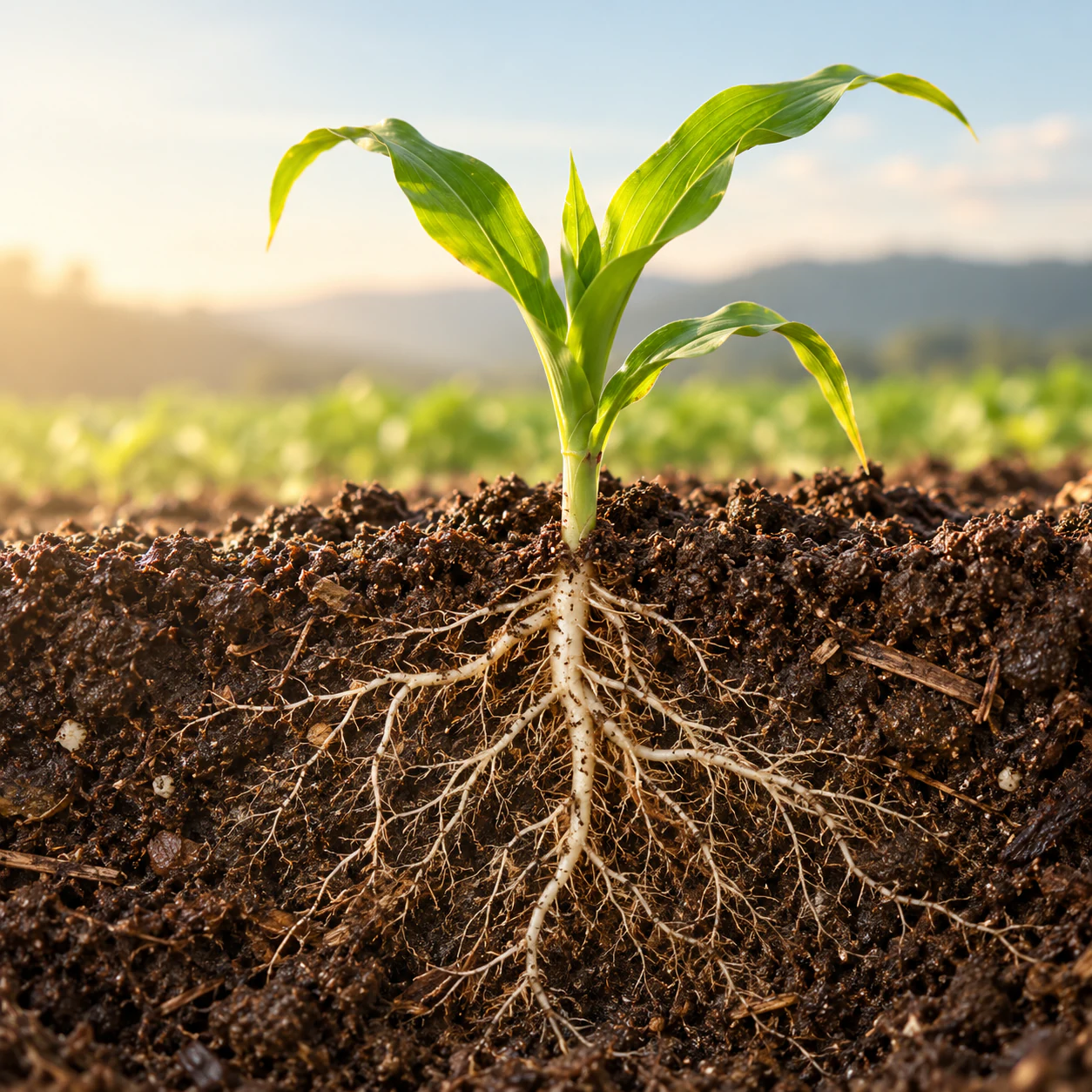
    Prepare peat without fire and drain it gently

    Burning and heavy machinery damage peat. Drain slowly and only as deep as needed, because over-drained peat shrinks and dries irreversibly.

    Technical detail
    • CIFOR guide (Riau): clear by hand cutting rather than fire or heavy machines.
    • MARDI: rapid or deep initial drainage causes marked shrinkage and subsidence, and over-drying cannot be reversed.
    • A 2022 Malaysian study found peat under pineapple more decomposed than natural peat.
    Regions
    Indonesia (Riau) · Malaysia (Johor)
    Confidence
    High confidence: several institutional sources agree
    • Core practice
    • Establishment
    • Stage: Land & planting material

    Plant on raised beds in double rows

    Raised beds reduce erosion and root and heart rots. Double rows fit more plants while leaving paths for work.

    Technical detail
    • Guam: contoured raised beds, often with black plastic mulch; double rows are the preferred layout.
    • Kerala: trenches about 90 cm wide, double rows 70 x 30 cm, about 40,400 plants/ha, planted 7.5 to 10 cm deep.
    • Riau peat project: 70 cm between plants and 100 cm between rows.
    Regions
    Pacific · India (Kerala) · Indonesia (Riau)
    Confidence
    High confidence: several institutional sources agree
    • Core practice
    • Pests & disease
    • Stage: Land & planting material

    Start with wilt-free planting material

    Mealybug wilt spreads through planting material. Take material only from healthy fields or use treated or tissue-culture plants.

    Technical detail
    • Pacific Pests: use tissue culture or hot water at 50°C for 30 minutes, or take material from fields with under 10% wilt.
    • Do not take suckers next to diseased plants. Avoid replanting where wilt occurred.
    • Crowns or slips can be dipped in horticultural oil before planting.
    Regions
    Pacific · Widely applicable
    Confidence
    Medium confidence: one institutional guide
    • Conventional
    • Soil & nutrition
    • Stage: Vegetative growth

    Basal manure and split fertilizer, with copper on peat

    Pineapple needs regular nitrogen and potassium. On peat, copper and zinc are often short.

    Technical detail
    • Kerala: 25 t/ha compost or manure basal, all phosphorus at planting, and N and K split through the crop.
    • CIFOR peat guide: about 10 t manure per hectare, then urea with copper sulfate at 2 to 3 months and again at 5 to 6 months.
    • MARDI reports zinc and copper deficiency in pineapple on Malaysian peat. Guam stops feeding at flowering. These are rates from single guides; adjust to a soil test.
    Regions
    Indonesia (Riau) · Malaysia · India (Kerala)
    Confidence
    High confidence: several institutional sources agree
    • Biological & regenerative
    • Crop care
    • Stage: Vegetative growth

    Grow pineapple with trees on restored peat

    In Riau, pineapple is grown between timber trees as part of peat restoration. This keeps cover on the land while trees establish.

    Technical detail
    • CIFOR and the Peat Restoration Agency trial in Bengkalis planted pineapple alongside tree planting.
    • The guide notes the practice comes from one project and may need adjusting elsewhere.
    Regions
    Indonesia (Riau)
    Confidence
    Emerging evidence: early or small-scale evidence
    • Biological & regenerative
    • Pests & disease
    • Stage: Vegetative growth

    Control ants so natural enemies can work on mealybugs

    Ants protect mealybugs and move them between plants. Breaking ant nests and keeping borders clean lets ladybirds and parasitic wasps reduce mealybugs.

    Technical detail
    • Pacific Pests: cultivate to destroy big-headed ant nests and keep field borders weed-free.
    • Remove and burn wilting plants as soon as they appear.
    • Ant baits or insecticides are a later step, used only if wilt passes about 3% of plants and products are registered locally.
    Regions
    Pacific · Widely applicable
    Confidence
    Medium confidence: one institutional guide
    • Core practice
    • Pests & disease
    • Stage: Vegetative growth

    Prevent Phytophthora heart rot with drainage and acidity

    Heart rot rots the central stem and gives a foul smell. Good drainage, healthy planting material and keeping soil out of the plant heart are the main defences.

    Technical detail
    • Guam: plant in acid soil (pH 5.0 to 6.9) on well-drained raised beds, and keep soil out of the plant heart.
    • TNAU and Kerala list fungicide sprays such as fosetyl-Al for affected fields; use only locally registered products.
    Regions
    Widely applicable
    Confidence
    High confidence: several institutional sources agree
    • Conventional
    • Crop care
    • Stage: Flower induction

    Force flowering for an even harvest

    Ethephon or calcium carbide in the plant heart makes plants flower together, so fruit can be harvested at one time.

    Technical detail
    • Kerala: 50 ml of 25 ppm ethephon with 2% urea and 0.04% calcium carbonate into the heart of 10 to 12 month old plants, in dry weather.
    • Guam: about half a teaspoon of calcium carbide in the heart; wrong dosing of advanced agents can give distorted fruit.
    • Adjust doses to the product's active ingredient and the local label.
    Regions
    India (Kerala) · Pacific
    Confidence
    High confidence: several institutional sources agree
    • Core practice
    • Harvest
    • Stage: Harvest & ratoon

    Harvest by eye colour and cut the stalk cleanly

    Pick when the base turns yellow and the eyes flatten. Cut rather than break the stalk, and handle fruit gently.

    Technical detail
    • BPTP Riau: harvest in the morning with a sharp knife; a 0 to 7 colour index guides use, with 3 to 6 suited to canning or local fresh sale.
    • Guam: for market, pick when the lower half to two thirds is yellow.
    • Guam: the first ratoon crop comes 12 to 14 months after the plant crop. The CIFOR peat guide keeps at most 2 suckers per clump.
    Regions
    Indonesia (Riau) · Pacific
    Confidence
    High confidence: several institutional sources agree
Regional notes

How practice differs by region

  • Malaysia (Johor peat)

    Pineapple has long been the main crop on Peninsular Malaysian peat, valued for its tolerance of acidity and low fertility. Zinc and copper deficiencies are common.

  • Indonesia (Riau peat)

    A CIFOR and Peat Restoration Agency guide combines fire-free land preparation, manure plus copper sulfate, and agroforestry with timber trees.

  • Research gap

    Indonesia (Lampung and mineral soils)

    Large plantations operate on acidic mineral soils in Lampung, but no public institutional guide was found for their practices.

Common mistakes

What to avoid, and what to do instead

  • AvoidBurning peat to clear land.
    InsteadClear by hand and drain gently to limit peat loss.
  • AvoidMixing planting material of different sizes.
    InsteadGrade suckers, slips and crowns so plants can be forced together.
  • AvoidTaking suckers from fields with wilt.
    InsteadUse material from wilt-free fields, or treated or tissue-culture plants.
  • AvoidLiming acid soil too much.
    InsteadKeep pH in the acid range the Guam guide gives (5.0 to 6.9) to help prevent heart rot.
  • AvoidForcing in wet weather or with guessed doses.
    InsteadForce in dry weather and dose to the product label.
Sources

Numbered sources

This page summarises the sources below. Check the original documents for full context.

  1. Growing Pineapples in Guam (opens in a new tab)R. Bevacqua, J. Tuquero, J. Bamba; University of Guam CNAS Extension, 2015
  2. Distribution, characterization and utilization of problem soils in Malaysia: a country report (opens in a new tab)Mohd. Zahari Abu Bakar, Abd. Wahab Nafis, Ting C.C., Abd. Rahim Mohamed (MARDI); JIRCAS TARS 15, c. 1980s
  3. Pineapple: cultivation practices (Kew variety) (opens in a new tab)Kerala Agricultural University, Information Gateway on Agriculture, undated
  4. Petunjuk Teknis Pascapanen Nanas (opens in a new tab)BPTP Balitbangtan Riau, Kementerian Pertanian RI, 2021
  5. Panduan Budidaya Nenas di Lahan Gambut (opens in a new tab)D. Puspitaloka, S. Hadi, H. Purnomo; CIFOR and Badan Restorasi Gambut, 2019
  6. Changes in soil microstructure and physical characteristics of peat soils under pineapple plantation (opens in a new tab)I.A. Azmi and N.Q.B. Kassim, IOP Conf. Series: Earth and Environmental Science 1059, 2022
  7. Pineapple wilt disease (fact sheet 380) (opens in a new tab)Pacific Pests, Pathogens & Weeds; G. Jackson, 2020
  8. Diseases of pineapple: heart rot (opens in a new tab)TNAU Agritech Portal, undated
THE NEXT STEP
LET'S CULTIVATE PROGRESS

Better soil starts
with better decisions.

Turn soil insights into practical action, from testing to targeted improvement.