
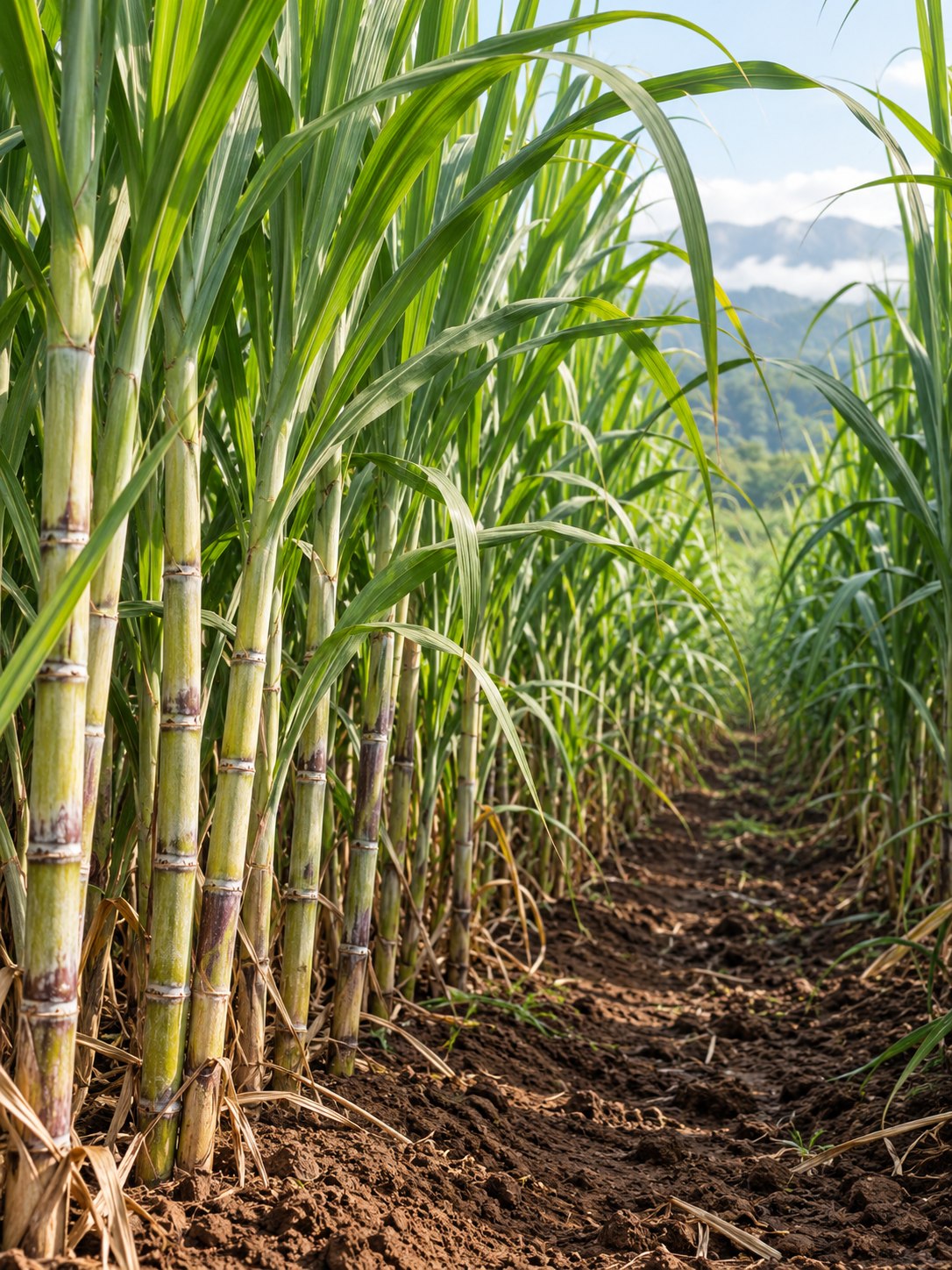
Industrial · Perennial grass, often ratooned

Sugarcane

Saccharum officinarum L. · Tebu · Poaceae

A high-biomass plantation crop that needs a deep root zone, reliable water and soil-test-led nutrition. Field traffic and ratoon management can change the soil conditions the next crop inherits.

  • Plantation
  • Ratoon crop

Summary of cited sources. TERAknow summarises published guidance from the sources linked on each page. Recommendations are general, not guaranteed: results depend on your soil, climate and variety, so confirm with local extension staff or an agronomist before acting.

Key facts

Site and soil at a glance

Soil
Deep, well-drained soil preferred[1]
Soil pH
Optimum 6.0–7.5[1]
Nutrition
Base phosphorus decisions on a soil test[2]
Ratoon
Attend to stubble and compacted rows soon after harvest[3]
Soil pH band: 6.0 to 7.5
Good practice

Practices by growth stage

Pick a stage, topic or approach to narrow the list. Open a card for technical detail and its sources.

Growth stage
Topic
Approach

Showing 5 of 5 practices.

    • Core practice
    • Establishment
    • Stage: Establishment

    Start with a deep, well-drained root zone

    Check drainage and soil constraints before planting; sugarcane prefers deep, well-drained soil.

    Technical detail
    • Assess compaction and drainage across the intended planting rows.
    • The FAO optimum soil pH range is 6.0 to 7.5; measure the field before planning correction.
    Regions
    Widely applicable
    Confidence
    High confidence: several institutional sources agree
    • Core practice
    • Soil & nutrition
    • Stage: Establishment

    Use a soil test to plan nutrition

    Let measured soil conditions guide phosphorus and other nutrient decisions instead of using a fixed programme everywhere.

    Technical detail
    • TNAU specifically recommends testing the soil and applying phosphorus based on soil-test values.
    • Adapt rates to local guidance, variety and expected crop demand.
    Regions
    India (Tamil Nadu)
    Confidence
    High confidence: several institutional sources agree
    • Core practice
    • Water
    • Stage: Tillering and elongation

    Keep water available through active growth

    Plan irrigation around crop stage and soil water storage; prolonged water shortage during growth can reduce cane development.

    Technical detail
    • The FAO review describes high water demand during growth and a different response during maturation.
    • Check drainage as well as irrigation so the root zone remains workable.
    Regions
    Widely applicable
    Confidence
    High confidence: several institutional sources agree
    • Biological & regenerative
    • Soil biology
    • Stage: Tillering and elongation

    Return suitable organic material to the soil

    Consider organic amendments and retained crop residue as part of a site-specific soil management plan.

    Technical detail
    • TNAU describes farmyard manure and composted sugarcane material as nutrient-management options.
    • Choose materials and application methods based on local soil tests and agronomic advice.
    Regions
    India (Tamil Nadu)
    Confidence
    Medium confidence: one institutional guide
    • Core practice
    • Crop care
    • Stage: Ratoon renewal

    Inspect and relieve compacted ratoon rows

    After harvest, inspect the row shoulders and address compaction where it limits the next crop's roots.

    Technical detail
    • TNAU's ratoon guidance includes work beside the ridges to break compaction.
    • Avoid burning the trash; plan residue handling for the field conditions.
    Regions
    India (Tamil Nadu)
    Confidence
    High confidence: several institutional sources agree
Regional notes

How practice differs by region

  • India (Tamil Nadu)

    TNAU's ratoon guidance addresses stubble, residue and row compaction soon after harvest. Adapt timing and methods to local machinery and soil moisture.

Common mistakes

What to avoid, and what to do instead

  • AvoidPlanning nutrition without a soil test.
    InsteadMeasure the field first and adapt the nutrient plan.
  • AvoidIgnoring compacted rows after harvest.
    InsteadInspect the ratoon root zone before the next flush of growth.
Sources

Numbered sources

This page summarises the sources below. Check the original documents for full context.

  1. Crop yield response to water: sugarcane (opens in a new tab)FAO
  2. Sugarcane nutrient management (opens in a new tab)Tamil Nadu Agricultural University, TNAU Agritech Portal
  3. Sugarcane crop production and ratoon management (opens in a new tab)Tamil Nadu Agricultural University, TNAU Agritech Portal
THE NEXT STEP
LET'S CULTIVATE PROGRESS

Better soil starts
with better decisions.

Turn soil insights into practical action, from testing to targeted improvement.